A Shifty Postmortem
Not an L per se, but recently, my Hârnic Shifty Louts game had to unfortunately come to a close as player attrition eventually won out in the end, and rather than keeping the campaign on life support, we decided it was in the best interest to put the campaign to rest.
Outside of that brief aside, I would like to thank my gracious players who breathed life into the campaign, were always flexible and adaptable when things changed, and kept the energy for a year+ of gaming, which is always no small feat. You all know you are, and I appreciate each of you deeply for taking time out of your lives to play advanced play-pretend.
Below is sort of a “long-time coming” post that goes into how my heartbreaker evolved over the course of the campaign, various interesting statistics, hype moments, and what I used to facilitate the game over the course of its lifespan.
The System
How the System Evolved
Broadly, the core resolution mechanic of the game was a d20 roll under in the vein of Into the Odd and similar Odd-likes. As the game grew, I lifted various things from various other materials and bolted things on
If you are interested in a more in-depth look at the rules, you can peruse them here.
Initial Games
The initial and early Shifty Louts games played around much more with strange races, lasers, and a differing combat system before settling into their current form. That version I tend to call Simple Louts, as it's much more oriented towards quick pick-up style dungeon delves that emerged during the Hârnic-oriented campaign.
Races like Mantoids, Slimes, and Saurians with additional stat modifiers and interesting features were there, as well as simple ammo die tracking over more granular tracking. I also made damage a flat 1d6, 1d6+1, or 1d6-1 for weapons and used Chainmail’s man-to-man combat table. All in all, it was great fun for these types of beer and pretzel games.
However, I’ve gone on to further change that earlier version of Simple Louts and use Arduin–style HP, Troika-esque equipment loadouts, and roll up Meatheads combat table and weapon damage tables. I would like to try and kick the tires on this updated form one day, but for now, it's more of a pet project that I fiddle with when the inspiration takes me.
Freeform Magic: Pros & Cons
Early on, some players did chafe against the rather free-form elements of the magic system, struggling to find how to orient themselves with describing what they want to do and how to best scale that to the situation.
Over my running, I’ve found that it was often a matter of giving guiding questions around “do you want to do damage, hinder something or someone, or do something else?”
A good axis to help structure and guide the rules of the freeform magic was Block, Dodge, Parry’s orientation of “Sculpt Energy”, “Tricks”, and “Practical Magic.” That framing helped folks get a better sense of what they want to do.

Although sometimes players just lack a certain creativity to assist and negotiate in this type of magic when the parameters are much more open, a certain analysis paralysis sometimes occurs, which appears in Whitehack and similar magic systems.
Conversely, aside from the guiding questions, I’ve also had players lose their creative shenanigans using this system to create flesh walls to prevent monsters from entering a room, explode corpses, gravity wells to pull groups into one area, charm fish onto the land for food, and crush enemy helmets like Magento.
All good fun with just a simple list of 40 words broken into either verbs or nouns. I’ve also found that Ben Milton’s Knave and Maze Rats, as well as Thriftomancer’s Incantations, are extremely valuable resources to draw upon for inspiration and handy when I need a new word!
If one were so inclined, one could create specific lists for particular “magical schools”, ala Illusionist, Psionics, Druidism, Necromancy, etc. Something I have done in other games, resulting in spells like Nuturing Clone, Withering Hand, and Binding Arm.
The beauty is that it is infinitely scalable and simple enough to create a plethora of spells as the associated spell scrolls and grimoire contents in like 20 minutes.
The heavy lifting is then done at the table rather than spending time in session prep.
XP Awarding & Advancement
Given how Shifty Louts evolved more from the traditional play loop of dungeon delve, kill monsters, and gold for XP, the need and question of how to award XP for more diagetic experiences arose. A common question in OSR is when players choose not to engage with the former play loop.
As this arose, I’ve found that 3d6DTL Feats of Exploration greatly assists in keeping players motivated to engage with the world and award experience for factors that don’t fall within the more traditional XP doling.
Simplified XP bands that group alike classes together for ease of tracking. Originally had used OSE’s experience bands, but found didn’t particularly like how a Cleric/Zealot leveled up faster than every other class, so I opted to use 4e Whitehack’s XP leveling.
I also ripped Mausritter’s advancement procedure to have players either attempt to improve their stats or add +1 HP.
To add additional flair, I also folded in the more diagetically facing Careers & Skills found in DBP, but added them as additional perks at every other level: 2, 4, 6, etc. So far, I haven’t found this particularly harmful to power balance, as the Careers and Skills aren’t too OP. That said, no one player has ever gotten past level 5.
Wilderness Exploration
As Shifty Louts developed in conjunction with using Hârnworld as a set dressing, there immediately became the issue of sleeping, camping, foraging, and hunting, and how the weather impacts these.

For weather, I sourced an awesome weather generator via Obsidian, built specifically for Hârn.
The beauty of this was that I was able to generate a year’s worth of weather down to six four-hour increments and use that during exploration, and how these impacted camping, hunting, travel, and more.
For these, I ripped Dolmenwood’s camping/sleeping table and combined it with Cairn’s use of Fatigue and Deprivation as resource depletion. The result has become something easy to use at the table while still having both a narrative and resource element to play upon.
As for hunting and foraging, I sourced those procedures from the WutC zine, Reavers, as it was just as easy to implement at the table and felt flavorful enough given Hârnworld’s more naturalistic set-dressing.
The larger point to derive, however, is that these rules and procedures naturally emerged from gameplay rather than me attempting to preempt them. So far, they have worked quite naturally together in a nice interlocking way that added a nice depth and textural element to the game overall, while still being useful and easy to implement and scale.
Player Onboarding
A particularly important point, for me at least, is the speed of character creation. The fewer points of friction from character generation to playing the better, especially in the context of onboarding new players.
I’ve always found the most “boring” parts, again for me, are kitting out a character. Sure, this can be a flavor exercise to inform character, but it's just never been a particularly interesting part of the game for me. Moreso, it can be a time sink, given how quickly character death and churn can occur in OSR-style games.
Again, what I’m writing isn’t particularly insightful, but it’s always something that I’ve attempted to find “shortcuts” for.
Particular examples of “ideals” are Cairn, Mausritter, and similar Odd-likes for me. Dolmenwood’s (et al) use of d6 rolling for equipment was such a slick, lightbulb moment for me. Troika’s character-based equipment on top of the standardized loadout was another north star for me.
However, despite the above, I’ve stuck to what Bastards has: torches, rations, a cloak, and a simple 1d6 roll to generate either a weapon, a spell scroll, or armor + weapon.
Simple, fluid, and with the least amount of time between character generation, equipping them, and playing. I even went as far as to vibe-code a character generator and a hireling generator for character onboarding.
If I had a bit more time, I would love to develop more flavorful, evocative equipment packages for players to pick or roll for each class. Eventually.
Another point of player onboarding is the choice of VTT. The options are multiple, and much ink has been spilled over pros and cons. I’d rather not litigate which one is better and for what. Find the tool that works for you and your players, simple as that.

However, I’ve consistently used Owlbear because
- it's free
- it's user-friendly at both a GM level and Player level
- it can serve as a good whiteboard, too
- it doesn’t gate and corral players into creating an account to use it.
That said, TLDraw has been another consistently implemented tool in my arsenal; it just happened that the campaign grandfathered itself into using Owlbear at the beginning. Such is Fate sometimes
Hârn Equipment Prices and Finances
Throughout the campaign, players have consistently found the prices for weapons, armor, and some general goods shockingly higher using the Hârn price list when compared to other DnD like games, and that has at certain points led to a certain mercenary outlook when it comes to using weapons, mounts, and saving up for armor, or at minimum salvaging weapons and arms from foes.

All this said, I believe the pricing accurately portrays just how important these items are when compared to the more humdrum, everyday objects like bread loaves, rope, and lodging.
I’ve continually returned to the Hârn item list over and over for other games. Though this has necessitated creating my own treasure tables for loot dropped and treasure hordes, especially in the context of Shifty Louts, it's made for a much more rewarding overall experience when using this specific equipment list.
Armor, Weapons & Damage
I had originally modelled weapon sizes upon what was outlined in Bastards and weapon damage segmented into small, medium, and large, ala WuTC, but found this limiting after a year+ of gaming, especially in the context of Hârnworld’s verisimilitudinous insistence.
Though I still nixed the granular armor that Hârn uses and simply averaged the prices according to the more common DnD vernacular of “unarmed, leather, chain, plate, helm, shield.”

I introduced differing damage values for weapons, and players said that it added more tactical depth. That said, the triumvirate size and damage orientation are super useful for quicker, pick-up style games.
Most recently, I’d begun incorporating David A. Hargrave's Arduin Trilogy critical hit and fumble tables, which add so much drama to the proceedings. I highly recommend using them for a gruesome flair!
The Game
How the Gameworld Evolved
My initial idea was to stress-test Shifty Louts with a simple exercise. Mike’s Dungeons fit the idea of using an ultra vanilla dungeon that would serve as a rather blank canvas. More of an exercise aimed at user-testing and feedback than for “generating a story”.

From the outset, the aim of using Mike’s Dungeons was more for its utilitarian, workman-like quality than for anything else.
However, by Session Four onward, I found myself pulling more and more from Hârnworld to inform the reasoning and logic behind what was in the dungeon.

Agrikan sacrifices, the hinterlands of the Thardic Republic, the sequestered silver mine of Iracu, and more began to influence the color and set-dressing of the game’s environs.
As soon as the group decided to follow a particular “throw away” plot point, I made up on the spot - finding NPCs they saved earlier turning up dead with the believed culprit missing - the players decided to abandon the original dungeon altogether to begin their overland exploits.
From that point onward, Shifty Louts turned from a simple delving exercise stress-test into a more traditionally framed campaign. Where I had placed the dungeon necessitated that the game geographically occur in the Thardic Republic, and it was simple enough to just bring in further what I was already cribbing from.
So after that, the open table name changed from “Shifty Louts” to Shifty Louts: Hârn.”
From there, most world and lore elements were drawn from Hârnworld’s vast corpus of work. A particular point became that this allowed for easier prep, as a lot of the heavy lifting in terms of points of interest, geography, world maps, factions, and NPCs was already done.

This allowed me to run things by the seat of my pants generally and only have to do heavier cognitive and creative lift when particularly needed.
My Shifty Louts game has generally focused on the Thardic Republic. Early on, around the western edge of Lake Benath and the hinterlands of the Republic, only the group bush-bashed their way into the second largest city on the island, Coranan.

I’ve generally been a Hârniac and broad advocate for its body of work to draw upon, granted its overall expensiveness, its DLC-like structure of published works, and depth and breadth of information often make it a somewhat opaque experience, and leave one with the question of “where to start.”

I would generally recommend the Hârnplayer book, the Magic, Religion, and a particular area as a main entry point. The first three suggestions give a nice introduction to the main elements within most Dragon and Elf games of the general world, how magic operates, and its major religions. From there, it's a matter of choosing an area and drilling down further.
Want Viking invasions? Seek Orbaal. Want social and political intrigue? Seek the Thardic Republic. Interested in a fractious, barbarian kingdom? Check out Rethem. There’s usually some sort of flavor that Hârn appeals to. Generally, it's working the “dungeon, wilderness, village” maxim, but backwards.
All in all, the game world itself has been pretty consistent, but I have also found myself changing things if need be. Introducing dragons, orc hordes, and more monsters than what Hârnworld suggests or points towards. Again, the maxim of Your Hârn May Vary seems applicable.
Game Statistics
Over the course of the game and campaign, I’ve always kept it an open table, and because of the nature of the heartbreaker, I’ve kept more detailed notes about players, characters, deaths, dates of player entry and exit, etc.
Through 46+ sessions, these metrics have emerged.
Total Players
- 8 unique players
Total Unique Characters
- 30 characters
Median XP at Death
- 536xp
Average Character Lifespan (assuming 150-250xp/session)
- 2-4 sessions
Total Character Deaths
- 15 characters
Campaign Shock Events
- 27th of Nuyazel (orc dungeon delve - the first TPK)
- 16th of Kelen (four magical explosions - the most recent TPK)
Highest Level Character
- Zoltan the Zealot (Lvl 4)
Amount of Classes Played
- 12 Wizards
- 5 Fighters (the most lethal to play)
- 4 Thieves (statistically the safest class to play)
- 3 Zealots
- 3 Barbarians
- 3 Acrobat
Raw Rule Change Volumes
- 75 discrete rule changes
Change Distribution by Category
- Magic - 35%
- Combat - 25%
- Classes - 15%
- Logistics - 10%
- Economy & XP - 5%
- Layout/Section Headings/Clarity - 5%
Subsystem Volatility
- Barbarian
- Armor/AC Philosophy
- Magic Damage Scaling
Iteration Intensity by Month
- July 2025 - magic clarification & terminology
- August 2025 - class identity overhaul
- October 2025 - armor, AC philosophy
- February 2026 - weapon damage redesign
Notable Moments
Over the course of the campaign, I’ve found particular highlights that players and I have returned to over and over again in our post-session chats and in-game asides.
Clifford Bradford Insta-Death
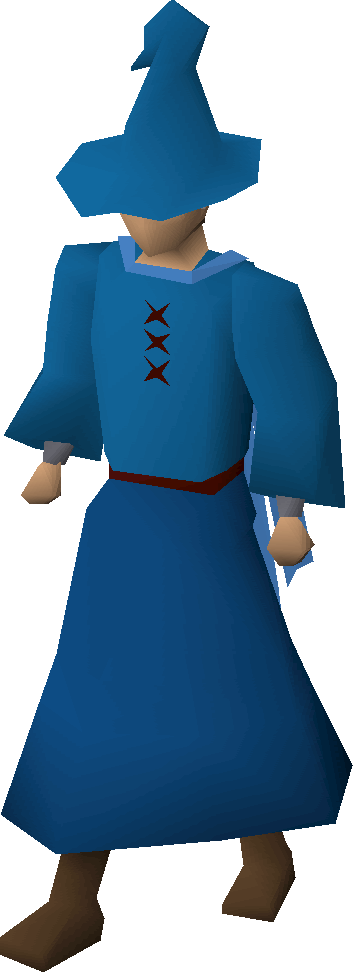
During the early beginnings of Shifty Louts, a player created the wizard Clifford Bradford, who, upon their first roll, managed to roll a critical fail for spell casting. Rolling on the “magikal misfire” table, their second roll was a snake eyes (1 and 1), resulting in an instant immolation of their character.
Balis of Jiml

A throwaway plot point I made up on the spot about a group of NPCs the players had saved earlier, turning up dead with the believed culprit missing. From there, the players decided to abandon the original dungeon to track and chase down the culprit. I eventually turned Balis into a murderous serial killer that had managed to somehow stay a few days ahead of the PCs until they were able to track him down and kill him in an abandoned and magically hidden ancient dwarven clanhold after 16 total sessions (nearly a month total in-game)
Milton the Owlbear

Another magikal mishap occurred when another wizard character failed two spell casting rolls, which resulted in the explosion of their hand, but also changed them into an owlbear for about five days in-game while escaping from a town gaol after a particular rough interrogation in an attempt to track down Balis.
The Dwarf Gold & Its Repercussions

Coinciding with the slaying of Balis, the treasure the group found in the dwarven clanhold changed the trajectory of the campaign; a chest containing 300 crowns (the equivalent of 960k shillings in-game, an astronomically large number in Hârnworld). The group has spent that time till now lugging the chest around the woods, burying it, finding a partial buyer, getting some of it stolen, attempting to bank with various power players, and, by and large, smuggling it from Point A to Point B in an attempt to become rich.
The Gargun Horde
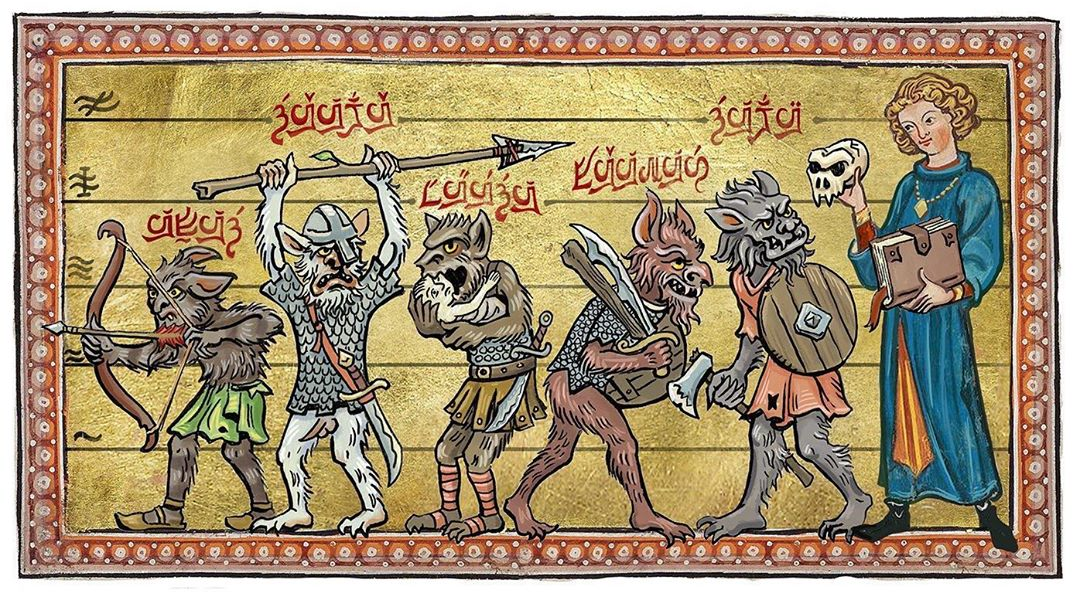
While trekking across the Thardic Republic hinterlands, I had encountered an orc lair. The Hârnic equivalent is called Gargun. This posed a major threat that saw the group push further into the woods and its first real engagement with a large, threatening force that couldn’t be handled or waved away. The Horde has (in-game) sacked the northern-most city of Stimos and claimed it as their own.
The Emergence of the Green Serpent
Another serendipitous moment was another random monster roll. This time, a green dragon, which saw the players take on the role of Thardic legionnaires to prevent the dragon from pushing further into the Republic proper. Like the Gargun Horde, the serpent continues to claim swathes of the northern hinterland portions of Tharda as its own.
The Wizard Nuclear Bomb Outside of Coranan
After finally reaching Coranan and smuggling in their dwarf gold, the group attempted to find buyers, first seeking the Agrikan Temple of the Octagonal Pit, which offered them religious protection in exchange for establishing a temple and engaging in services for the Temple and their gladiatorial games in the barbarian-filled southern border of the Republic.
The group proceeded to attempt to find another at the Mercantyler’s Guild who offered an introduction to a banking member for procuring monsters and creatures for the Gladiatorial Games.
The group, in their hubris, thought this to be easy, only to find themselves setting off a chain reaction of arcane explosions on the borderland between Tharda and another state, Kanday, resulting in TPK and a soft reset for the campaign in 2026 as completely new characters.
What I’ve Used Throughout the Campaign
Below is a list of assets, materials, and other ephemera that I’ve used over the course of the campaign. I hope you derive some value from it.
- Rule Inspiration
- Hârn Equipment and Prices
- Dodge, Parry, Block by Goblin Dice Games
- Whitehack 4e by Christian Mehrstam
- Incantations by Thriftomancer
- Mausritter by Issac Williams
- Cairn by Yochai Gal
- Bastards by Micah Anderson
- Errant by Kill Jester
- The Arduin Trilogy by David A. Hargrave
- Feats of Exploration by 3d6 DTL
- Reavers by Adam and Canyon
- Ships by Matthew Morris
- Swyvers by Luke Gearing & David Hoskins
- Delving Deeper by Simon J. Bull
- The Littlest Brown Book by Thomas E.
- World & Lore
- Hârnplayer
- Hârnworld: Religion
- Hârnworld: Herblore
- Hârnworld: Barbarians
- Hârnworld: Shek-Pvar
- Hârnworld: Ivashu
- Nasty, Brutish, & Short: The Orcs of Hârn
- Hârnworld: Thardic Republic
- Hârnworld: Coranan
- Hârnworld: Heroth Castle
- Foes, Friends, and Followers by Kerry Mould et al
- Virtual Table Top
- Creative Assets
- Hârnworld Maps: F5, F6, E6, & E7
- Hârn Pottage 1 by Mike St. Pierre
- Mike’s Dungeons by Geoffrey McKinney
- Coat of Arms Maker
- TlomDev’s Tokens